
Someone mentions your business at a dinner party. The person listening thinks "that sounds useful" and reaches for their phone. They type what they heard - and land on someone else's website.
That single moment - the gap between hearing a name and typing it correctly - is where countless businesses lose customers they never knew they had. It's called the "radio test," and in 2026, it matters more than ever.
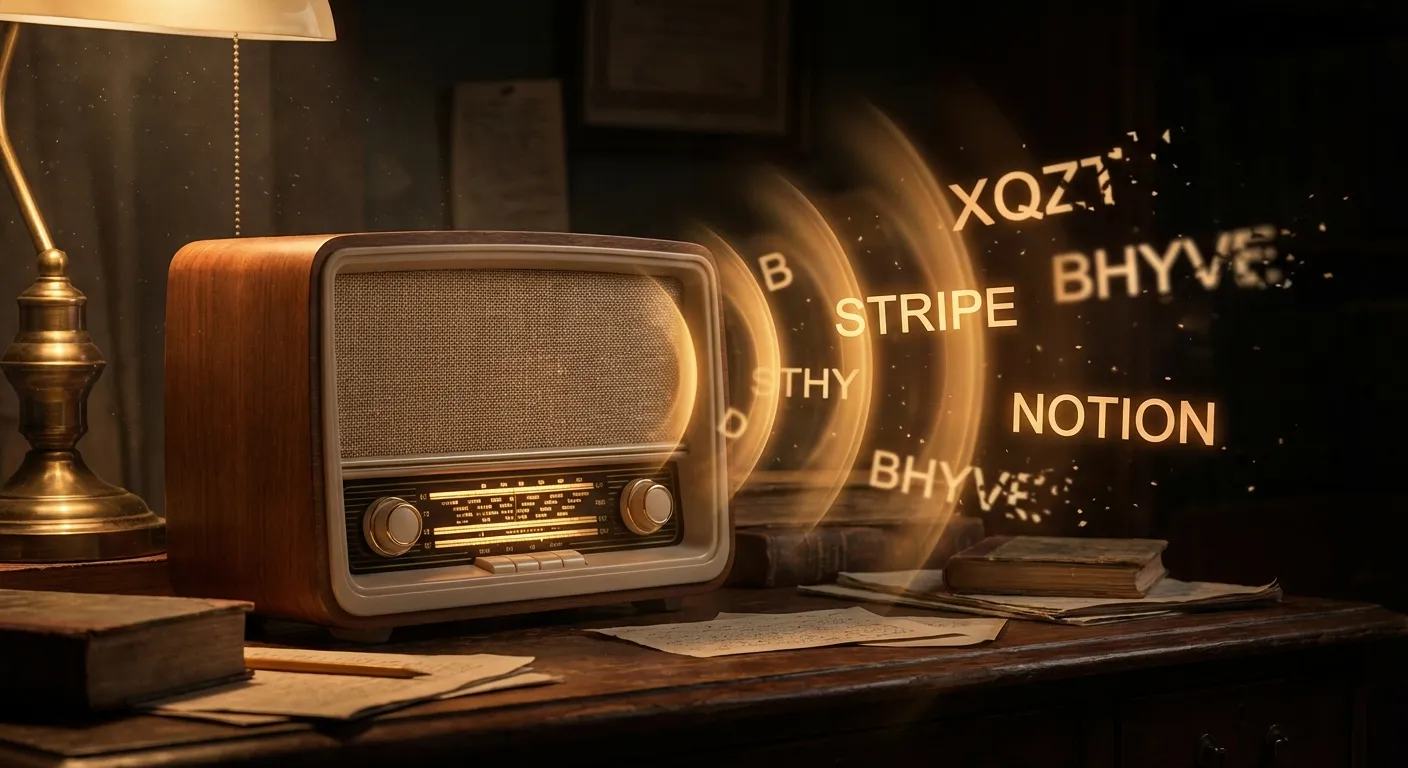
What the Radio Test Actually Measures
The radio test is simple in concept: if someone hears your domain name spoken aloud, can they spell it correctly on the first try?
No context clues. No business card to reference. Just sound to spelling, in real time.
This test captures something deeper than just spelling ease. It measures what linguists call phoneme-to-grapheme transparency - how predictably the sounds in a word map to their written form. English is notoriously inconsistent here ("cough," "through," "though" all use "-ough" differently), which means domain names face a uniquely high bar.
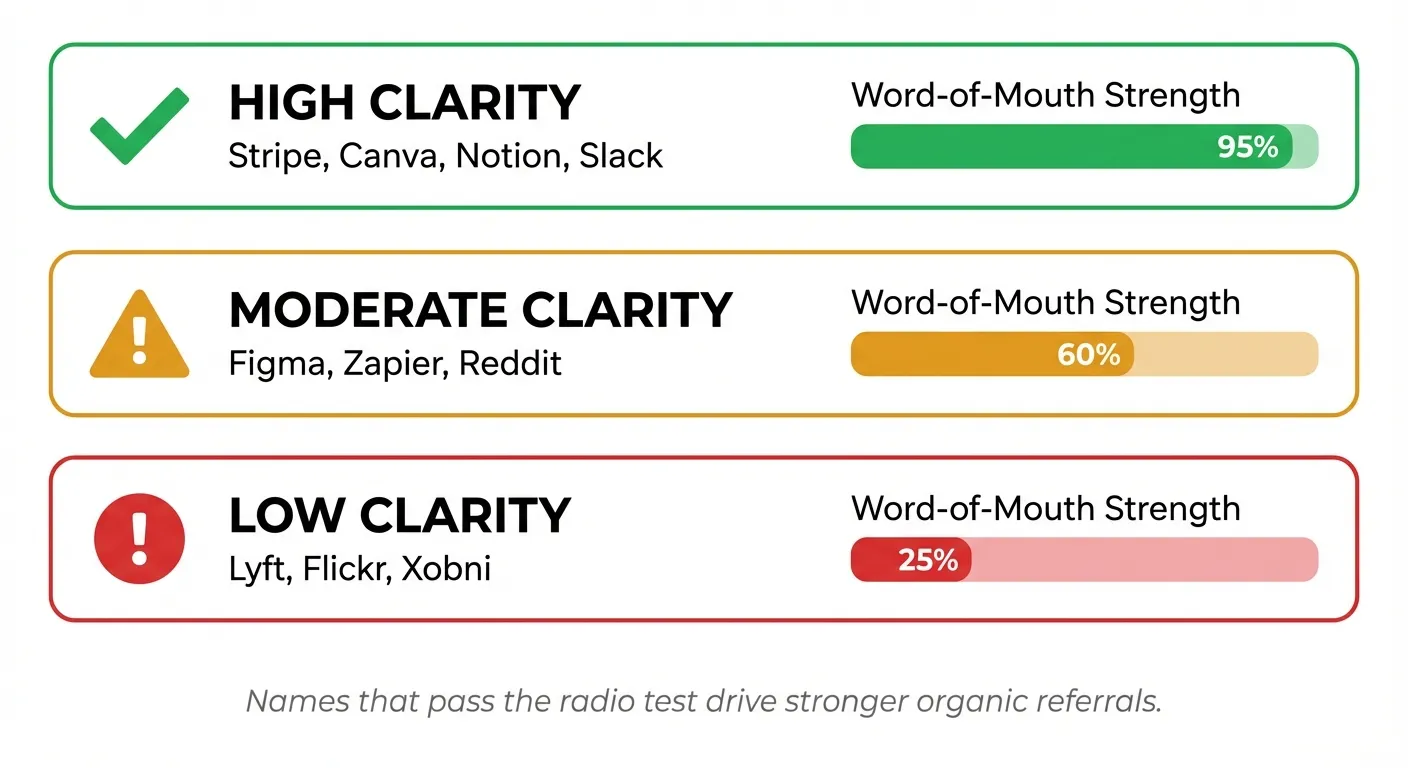
A name like "Stripe" passes effortlessly. Hear it once, spell it once, arrive at the right website. A name like "Lyft" introduces a stumbling block - is it "Lift"? "Lyft"? "Lyfte"? Each wrong guess is a lost visitor.
The Author Media radio test framework identifies seven specific failure points: numbers, similar-sounding letters, acronyms, underscores, dashes, text speak, and non-standard spelling. If your domain triggers any of these, you're leaking traffic every time someone tries to find you by ear.
Why Verbal Clarity Matters More in 2026
The radio test was coined when radio advertising was the main channel where people heard brand names without seeing them. Today, that scenario plays out constantly - and through more channels than ever.
Voice Search Has Exploded
There are now 8.4 billion voice assistant devices in active use globally, with over 20% of the world's population using voice search regularly. When someone asks Alexa to "search for that business called..." your name needs to survive being spoken, interpreted by AI, and matched to the correct result.
Names with ambiguous pronunciation or non-standard spelling create a double problem: the user might say it wrong, and the voice assistant might interpret it wrong. Two chances to lose the connection.
Word-of-Mouth Is Still King
Despite all the digital channels available, recommendations from friends and colleagues remain the most trusted form of marketing. But word-of-mouth only works if the "word" can travel accurately.
Think about the last time someone recommended a product to you in conversation. If the name was clear - "Notion," "Canva," "Slack" - you probably found it easily. If it was something like "Fiverr" or "Flickr," you may have needed to ask "how do you spell that?" - and that friction point is where referrals die.
Podcasts and Audio Content Dominate
The podcast boom means millions of brand mentions happen in audio-only contexts daily. No clickable link, no visual spelling. Just a host saying your name and hoping listeners can find you later. A name that fails the radio test is invisible in this entire channel.
The Cognitive Science of Sticky Names
Verbal clarity isn't just about practical spelling accuracy. Research shows it connects to something deeper in how our brains process and remember language.
Processing Fluency Drives Trust
The easier a name is to process mentally, the more positively people evaluate it. This is called processing fluency, and its effects are remarkably consistent across studies.
Research on brand naming psychology shows that names requiring minimal cognitive effort receive more positive perception and better memorability. Names in the six to eight character range perform best in memory retention tests - long enough to be distinctive, short enough to process effortlessly.
This explains an important paradox: a "clever" name that's hard to process can actually feel less trustworthy than a simple one. Your brain interprets processing difficulty as a warning signal - if something is hard to understand, it might not be reliable.
Sound Shapes Perception Before Meaning
Your brain evaluates the sound of a name before it even processes the meaning. This phenomenon, well-documented through the bouba/kiki effect, shows that round, soft sounds (like "bouba") feel approachable and warm, while sharp, angular sounds (like "kiki") feel precise and edgy.
Neuroscience research confirms that hard consonants create feelings of energy and sharpness, while soft sounds convey smoothness. Front vowels suggest smallness and precision; back vowels suggest size and depth. These associations are largely hardwired, not learned - they hold across cultures and languages.
This matters for verbal clarity because a name that sounds good is easier to remember. A 2025 study published in PLOS ONE found that words composed of aesthetically pleasing phonemes showed stronger recall performance, with participants remembering approximately 53% of phonetically appealing words versus significantly fewer unappealing ones.
The Misspelling Trap
Intentionally misspelled names are one of the most common radio test failures. The logic seems sound: "Lyft" is more distinctive than "Lift," and easier to trademark. But the research paints a different picture.
A study from the University of Tennessee found that consumers react increasingly negatively as misspellings deviate further from correct spelling. Separate research showed people were up to 34% more likely to buy from a correctly spelled brand name than a creatively misspelled one - "Fresh" outperformed "Phresh" by 33.6% in purchase intent.
The exception? Misspellings work when there's a clear conceptual connection that justifies the deviation, and when the brand has the marketing budget to teach the correct spelling. Most startups have neither. As we explored in why keyword mashing damages brands, names that confuse people create friction at every touchpoint.
How to Test Your Domain Name
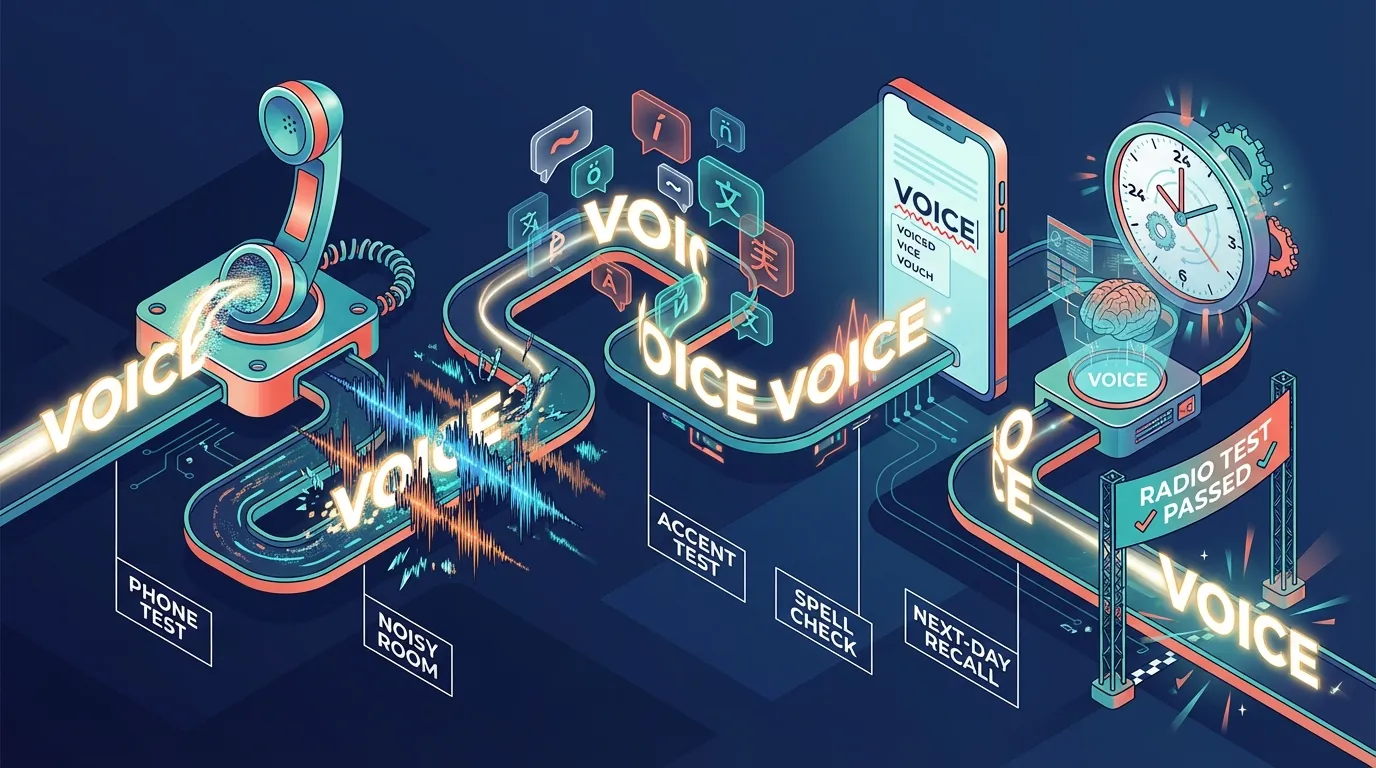
Here are five practical tests you can run before committing to a name.
1. The Phone Test
Call a friend and say your domain name once - naturally, at conversational speed. Ask them to text it back to you. If they get it wrong, or even hesitate, that's a fail.
Do this with at least three people, ideally from different backgrounds. What's obvious to you (the person who invented the name) may not be obvious to someone hearing it fresh.
2. The Noisy Room Test
The phone test happens in ideal conditions. Real-world mentions happen in noisy restaurants, on crackling phone connections, at busy conferences. Say your name with background noise. Does it survive?
Short, phonetically distinct names hold up. Names with easily confused consonants (b/d, m/n, s/f) or swallowed syllables fall apart.
3. The Accent Test
If your business serves a global market - or even a diverse local one - test your name with speakers of different accents and first languages. A name that's crystal clear in one accent can become ambiguous in another.
Pay particular attention to vowel sounds, which vary dramatically across English accents. "Dot" and "dat" are the same vowel in some dialects.
4. The Spell-Check Test
Type your name into a phone keyboard. Does autocorrect fight you? If it does, every customer who types your URL into a search bar will face the same battle. Autocorrect is essentially a proxy for how "expected" your spelling is.
5. The Next-Day Test
Mention your name casually to someone. The next day, ask them to find your website. If they can recall the name and spell it correctly after 24 hours, your name has both memorability and verbal clarity - the combination that drives organic growth.
What Makes Names Pass
Patterns emerge when you study names that consistently pass the radio test:
- Spelled as expected - No silent letters, no unusual letter combinations, no ambiguous vowels
- One to three syllables - Working memory handles these easily; neuroscience research confirms that one-to-three syllable names outperform longer alternatives
- Common phonetic patterns - Uses sound combinations that exist in everyday English words
- No homophones - Doesn't sound identical to another common word or brand
- Distinct consonants - Avoids easily confused sound pairs (s/f, b/d, m/n, p/t)
For a broader framework on evaluating domain names across all five brand signals - not just verbal clarity - see our 5-minute brand audit guide.
What Makes Names Fail
Conversely, these patterns predict radio test failure:
- Dropped vowels - "Tumblr," "Flickr," "Grindr" - the missing letter is the first thing people add back
- Non-phonetic spelling - "Xero" (is it "zero"? "ex-ero"?), "Xiaomi" (good luck)
- Numbers mixed with words - "4Square" vs "FourSquare" vs "Foursquare"
- Adjacent similar sounds - Too many similar consonants or vowel sounds create a muddy impression
- Unfamiliar letter patterns - Combinations like "xq," "zl," or "bv" that don't occur in common English words
Verbal Clarity in the Age of AI
As brandable names continue to outperform keyword-stuffed alternatives, verbal clarity becomes a key differentiator in what makes a brandable name actually work.
A name can be creative, distinctive, and available - but if people can't spell it after hearing it, the brand equity leaks away through misspelled searches, failed referrals, and voice assistant misinterpretations.
The best names nail both: they're distinctive enough to own mentally, and clear enough to transmit accurately through speech. "Stripe" does this. "Notion" does this. "Canva" does this. None of these names contain industry keywords, but all of them pass the radio test effortlessly.
Making the Right Choice
The radio test isn't the only thing that matters when choosing a domain name. Brand fit, authority, SEO potential, and resale value all play important roles. But verbal clarity is uniquely unforgiving - the other metrics can be compensated for with marketing spend, while a name people can't spell creates permanent friction.
If you're evaluating domain candidates and want to see how they score on verbal clarity alongside four other brand metrics, URLGenie runs this analysis automatically. It scores every generated name for verbal clarity - the same radio test principles covered here, applied consistently across dozens of candidates so you can compare objectively.
But whether you use a tool or test names manually, the principle is the same: say it, spell it, find it. If your name can survive that chain intact, you've passed the test that matters most for word-of-mouth growth.