
Your domain name works against you every single day. Not in dramatic ways - no one writes to complain about "BestCloudSolutions.io" or "FastShipPro.com." The damage is subtler than that.
It's the potential customer who can't quite remember your URL when they want to return. The investor who scrolls past your pitch because the name signals "side project" rather than "serious company." The referral that never happens because your name is too generic to stick in anyone's memory.
This is what keyword mashing does to brands. Quietly, persistently, expensively.

What Keyword Mashing Actually Is
Keyword mashing is the practice of combining industry terms, descriptive words, and modifiers to create a domain name. The formula looks something like:
[Adjective] + [Industry Term] + [Suffix]
This produces names like:
- FastDeliveryHub
- SmartPaymentPro
- CloudStorageNow
- BestMarketingAgency
- QuickShipOnline
These names feel safe because they describe the business. They seem SEO-friendly because they contain keywords. And they're often available because no one else wanted them.
That last point should be a warning sign, not a green light.
The Credibility Problem
Your domain name is the first signal of professionalism a potential customer encounters. Before they see your product, read your copy, or compare your pricing - they see your name.
Keyword-mashed names signal amateur hour. They communicate:
- "We couldn't think of anything creative"
- "We don't understand branding"
- "We're probably temporary"
- "We're one of many, not unique"
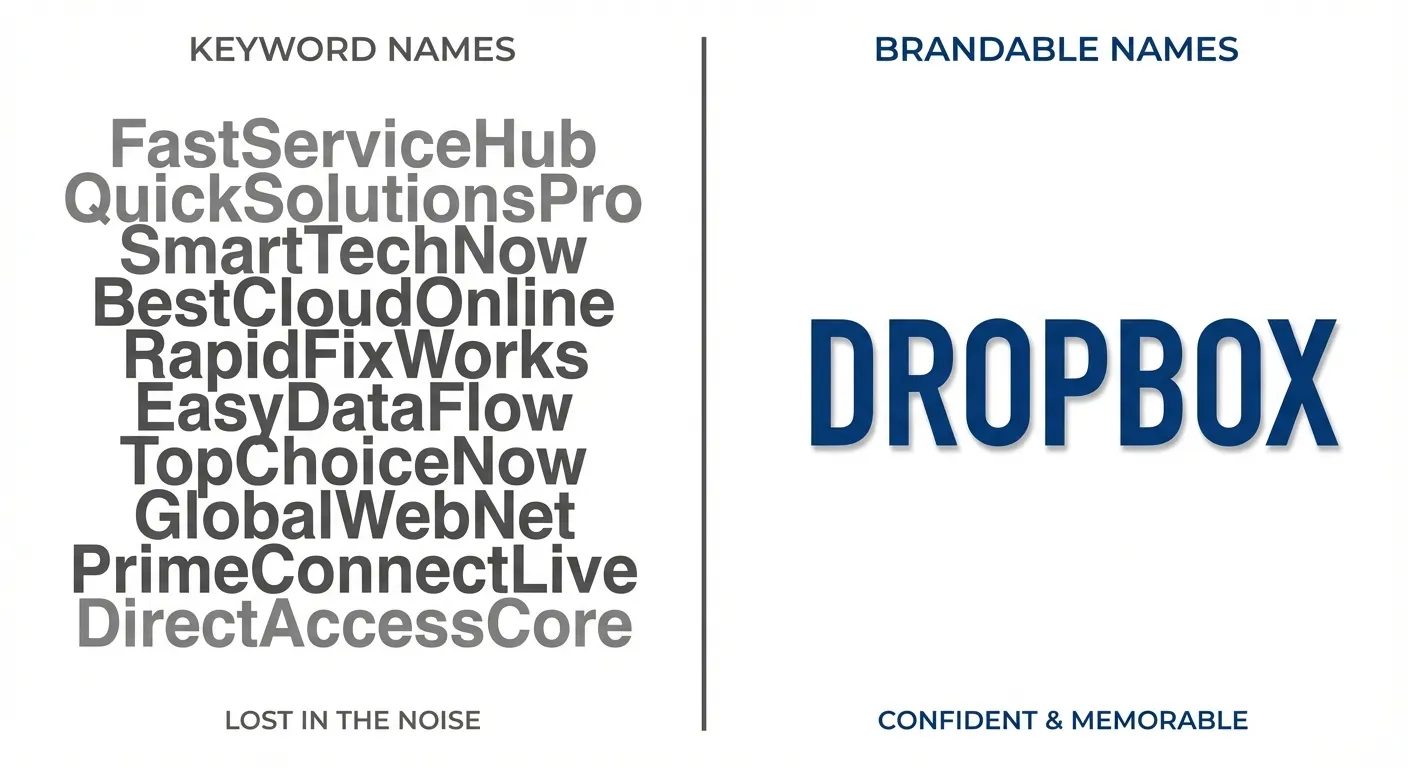
Compare the impression left by "SmartAnalyticsPro.io" versus "Amplitude." Or "CloudStorageHub.com" versus "Dropbox." The second name in each pair feels like a real company. The first feels like a landing page someone spun up over a weekend.
According to Qualtrics' 2025 Consumer Trends research, trust is the number one priority consumers consider when interacting with a business - and they're 1.7x more likely to purchase from brands they trust. Your domain name is where that trust-building starts.
Generic keyword names don't build trust. They erode it before you've said a word.
The Memory Problem
Here's a question: If someone mentioned your business at a networking event, could the listener remember your URL an hour later?
With a brandable name like Stripe, Notion, or Figma - yes, probably. These names are distinctive enough to lodge in memory.
With FastPaymentPro, CloudDesignHub, or SmartBookingNow? Almost certainly not. These names are structurally indistinguishable from hundreds of competitors using the same formula.
The forgettability of keyword-mashed names has real costs:
- Word-of-mouth referrals fail because people can't recall what to search
- Return visitors type variations and end up on competitors' sites
- Brand recognition never develops because there's nothing distinctive to recognize
Professional naming experts at Spellbrand identify this as a critical mistake: overly descriptive names undermine long-term brand value precisely because they sacrifice memorability for literal description.
The SEO Damage
Here's the cruel irony of keyword mashing: the supposed SEO benefit doesn't exist. In fact, generic keyword domains often perform worse in search.
Google's John Mueller has explicitly cautioned businesses against generic keyword domains. His reasoning is straightforward: when your domain is a generic keyword, you compete against everyone else targeting that keyword - including directories, aggregators, and established players.
"I see a lot of small businesses make the mistake of taking a generic term and calling it their brand," Mueller noted. The result is getting lost in a sea of similar-sounding competitors.
A distinctive brand name gives you something keyword domains can't: branded search volume. When someone searches "Stripe payments" or "Notion templates," Google knows exactly which entity they want. When someone searches "fast delivery services," Google has no idea if they mean your FastDeliveryHub or the concept of fast delivery in general.
As covered in our complete guide to choosing a domain name, modern SEO rewards brand authority and recognition - not keyword stuffing in your domain.
The Marketing Disadvantage
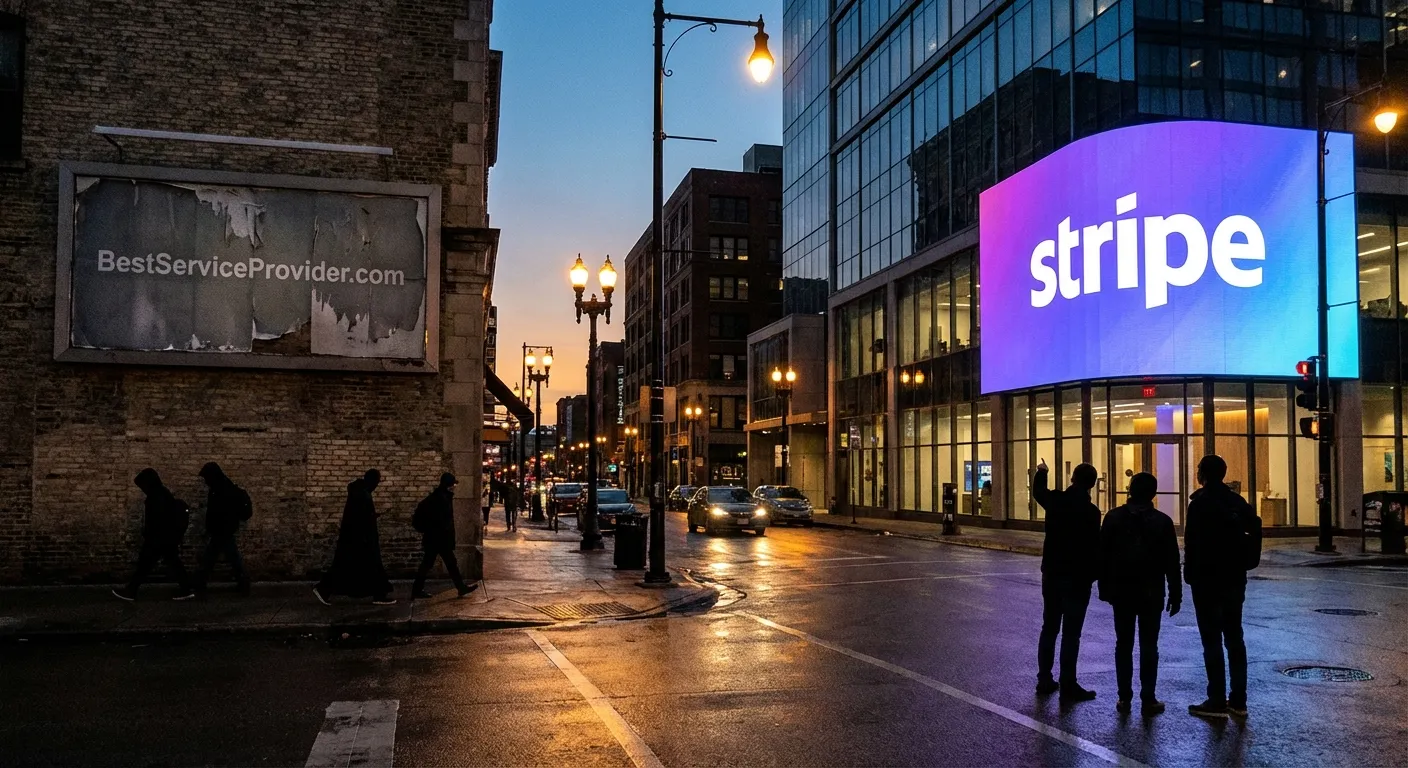
Keyword-mashed names create friction across every marketing channel:
Paid advertising - Your ads look like spam. When users see "SmartLeadsPro.com" alongside "HubSpot.com," they know which one is probably the established player and which one might be a fly-by-night operation.
Content marketing - Bylines from "generic-keyword-domain.com" carry less authority than bylines from distinctive brand domains. Editors notice this. So do readers.
Social media - Handles based on keyword names are either unavailable or look spammy. @FastDeliveryHub doesn't invite engagement the way @Deliveroo does.
Email deliverability - Generic keyword domains are statistically more likely to be flagged by spam filters. Real businesses have real names; spam operations use keyword variations.
Partnerships and press - Journalists and potential partners make snap judgments about legitimacy. A keyword-mashed name puts you in a credibility deficit from the first impression.
What Actually Works
The alternative to keyword mashing isn't random characters or trendy misspellings. It's intentional brand naming - creating a name that serves your brand strategy rather than just describing your product.
Strong brandable names share common traits:
Distinctiveness - They don't sound like everyone else in the category. "Figma" stands out among design tools precisely because it doesn't contain "design" in the name.
Memorability - Short, pronounceable, and sticky. You hear it once and can recall it later. This is what naming professionals call passing the "radio test" - can someone spell it after hearing it spoken?
Flexibility - They don't limit you to your current product. Amazon started with books but wasn't called "OnlineBooksStore.com." That flexibility let them expand.
Trademark potential - Generic keyword combinations are nearly impossible to protect legally. Distinctive names can build defensible brand equity. For a deeper dive into what makes names work across these dimensions, see our complete guide to naming your business.
The NameSilo blog analyzed this extensively: brandable domains build stronger long-term brand equity, command higher resale value, and rank better over time due to branded search volume and authority signals.
The Hidden Cost Calculation
Let's make this concrete. If your keyword-mashed name causes:
- 10% lower conversion rate due to reduced credibility (conservative estimate)
- 20% fewer word-of-mouth referrals due to forgettability
- Higher CAC because paid ads perform worse for generic domains
...the cumulative cost over a business's lifetime is substantial. We're talking potentially hundreds of thousands in lost revenue for an established business - all stemming from a naming decision made in the early days.
Rebranding later is possible but expensive. You lose existing brand equity, confuse existing customers, and spend significant resources on the transition. Far better to invest in naming correctly from the start.
Breaking the Pattern
If you're in the naming phase now, resist the keyword-mashing temptation. Yes, brandable names are harder to find. Yes, the good .com domains are taken. But those constraints push you toward creative solutions that serve your brand better in the long run.
Consider:
- Alternative TLDs that fit your industry (.ai for AI companies, .io for tech) rather than keyword-stuffing a .com
- Invented words that are distinctive and protectable
- Metaphorical names that evoke your value without literally describing it
- Name + TLD combinations where the extension completes the name naturally
If you're stuck with a keyword-mashed domain now, the calculus is harder. Evaluate honestly: How much is this name costing you? At what point does rebranding become the smarter financial decision?
Tools exist now that can help. URLGenie uses AI to brainstorm genuinely creative options - not keyword combinations - and scores them for brandability, memorability, and risk factors. It won't do the hard work of brand strategy for you, but it dramatically accelerates finding names worth building on.
The Bottom Line
Keyword mashing felt like a safe choice. It described your business, contained relevant terms, and was available. But "available because nobody wanted it" is not the same as "good."
The real cost isn't the $12 domain registration. It's the credibility you never build, the referrals that never happen, the SEO advantages you never unlock, and the brand equity you never accumulate.
Your domain name works for or against you every day. Make sure it's working for you.