
You typed your business idea into a domain name generator. Maybe you tried GoDaddy's, or Namecheap's, or one of the dozens that appear when you search "domain name generator."
And you got suggestions like "TechSolutionsPro.com" or "FastDeliveryHub.net" or "CloudServiceNow.io" - names that sound like they were assembled by a robot in 2008. Which, essentially, they were.
You're not alone. Nearly everyone who's tried to name a business online has stared at a list of generator suggestions and thought: These are all terrible. What am I supposed to do with this?
The problem isn't you. It's that most domain generators aren't designed to find good names. They're designed to find any available name and sell it to you.
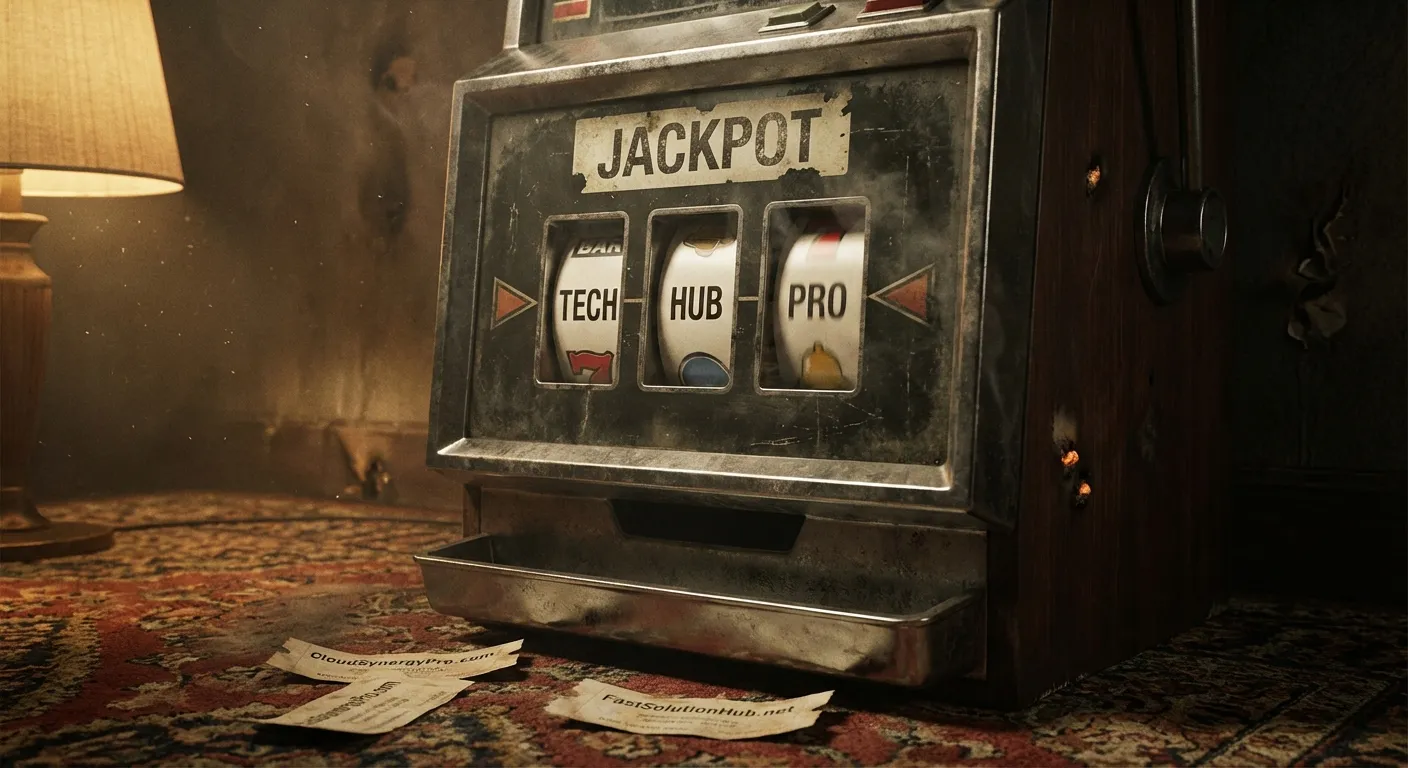
The Real Purpose of Most Domain Generators
Here's the uncomfortable truth: registrar-based domain generators are lead generation tools, not naming tools.
When GoDaddy, Namecheap, or Domain.com offers a "free" name generator, they're not providing a service out of kindness. They're trying to move you toward a purchase - ideally a premium domain with higher margins.
This creates a fundamental misalignment:
- You want: A memorable, brandable name that fits your business
- They want: You to buy something from their inventory
That's why these tools rarely produce genuinely creative suggestions. Creativity isn't the goal. Transaction is.
The Keyword Mashing Problem
Most generators use the same basic technique they've used for 15 years: keyword combination.
You input "coffee shop" and get:
- CoffeeShopHub
- BestCoffeeShop
- CoffeeShopNow
- MyCoffeeShopOnline
- TheCoffeeShopPro
This isn't naming. It's string concatenation with a suffix dictionary.
The technique persists because it's cheap to implement and produces available domains. But "available" and "good" are very different things.
Google's John Mueller has explicitly warned against generic keyword domains, noting they make businesses harder to distinguish in search results. When your domain sounds like every other competitor's, you're competing against directories, aggregators, and everyone else targeting those same keywords.
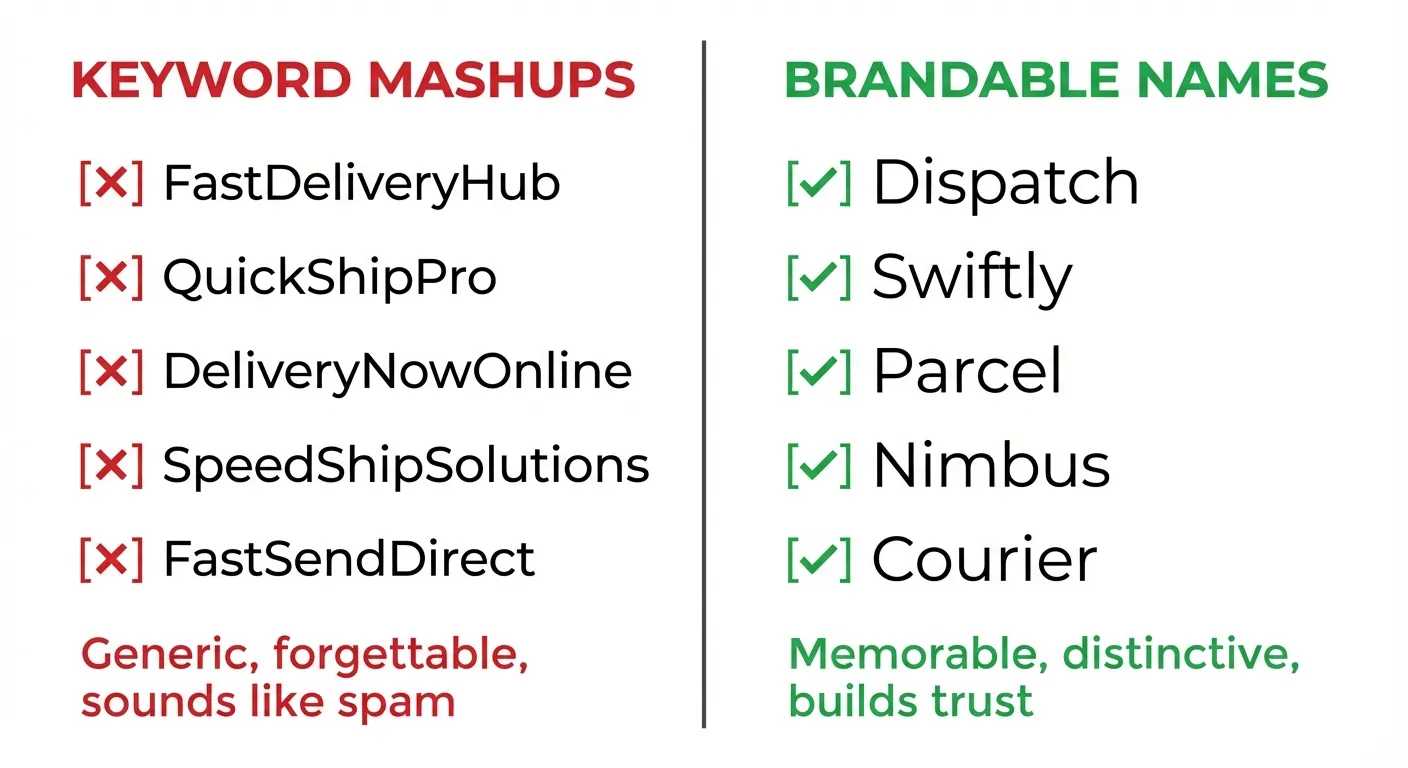
Keyword-stuffed names fail the basic tests of branding:
- They're forgettable (which "FastDeliveryPro" was that again?)
- They're hard to differentiate from competitors
- They signal "small operation" rather than "serious brand"
- They often sound spammy or untrustworthy
Why "AI-Powered" Often Means Nothing
In 2026, every registrar claims their generator is "AI-powered." The word has become marketing decoration.
What does their "AI" actually do? Usually the same keyword combination - perhaps with a slightly better thesaurus, or the ability to suggest synonyms. Type "fast delivery" and instead of just "FastDeliveryHub," you might also get "QuickShipPro" or "SwiftSendNow."
This isn't artificial intelligence in any meaningful sense. It's the same mechanical process with better marketing copy.
We covered this distinction in detail in our comparison of AI domain generators. The short version: real AI understands context and makes creative leaps. Keyword mashers just shuffle word combinations.
The Five Reasons Generators Produce Bad Names
Understanding why generators fail helps you avoid wasting time with them. Here are the core problems:
1. No Understanding of Your Business
Generators treat your input as raw keywords, not context. If you type "AI-powered analytics platform for e-commerce," a generator extracts "AI," "analytics," "e-commerce" and starts mashing them together.
A human naming consultant would ask: What's your positioning? Who are your competitors? What feeling do you want to evoke? Generators skip all of this.
2. No Quality Filter
Generators optimize for availability, not quality. An available domain is a sellable domain. Whether it's actually a good name is irrelevant to their business model.
This is why you see suggestions that are technically available but practically unusable - awkward spellings, confusing word combinations, names that sound like spam.
3. No Risk Assessment
According to branding experts cited by Frozen Lemons, trademark disputes average $120,000 to $750,000 in legal fees. Yet most generators suggest names without any check for similar existing businesses, trademark conflicts, or problematic associations.
They might suggest "AmazonFresh Consulting" without warning you that Amazon will have something to say about that.
4. Conflict of Interest
Free tools need to monetize somehow. For registrar generators, that means:
- Pushing premium domains with higher margins
- Suggesting names from their aftermarket inventory
- Upselling related services (hosting, email, SSL)
The suggestions aren't optimized for your success. They're optimized for their revenue.
5. Outdated Assumptions About SEO
Many generators still operate on the 2010-era assumption that exact-match domains help with SEO. They push keyword-heavy names because those used to rank well.
Modern search engines have moved far past this. As noted in recent analysis of keyword brand names, Google now struggles to distinguish between businesses and informational queries when domain names are generic keywords. A distinctive brand name actually helps search engines understand you're a specific entity worth surfacing.
What Good Naming Actually Requires
Naming isn't a mechanical problem with a mechanical solution. It requires:
Creative brainstorming - Not just word combinations, but conceptual leaps. If you're building a meditation app, the best names might not contain "meditate" or "calm" at all. They might evoke the feeling - like "Headspace" or "Stillpoint."
Quality judgment - Humans instinctively know that "Stripe" is a better name than "OnlinePaymentProcessor." Good naming tools need this filter too.
Context awareness - B2B fintech names sound different than consumer lifestyle brands. A generator that treats all inputs identically produces generic output.
Risk detection - Is there already a company with this name? Does the word have negative connotations somewhere? Are you walking into a trademark minefield?
Strategic alignment - Does this name fit where you're trying to position your brand? Premium? Approachable? Technical? Playful?
None of this happens when you type keywords into a box and click "generate."
When Generators Are (and Aren't) Useful
Let's be fair: registrar generators have their place.
They're useful for:
- Quick availability checks when you already have a name
- Browsing TLD options for a specific string
- Getting unstuck when you have no ideas at all (even bad ideas can spark better ones)
They're not useful for:
- Actually deciding on a business name
- Finding creative, brandable options
- Understanding whether a name is good or risky
- Professional naming decisions you'll live with for years
If you're in the early "just exploring" phase, click around in a generator. But don't mistake that for a real naming process.
A Better Approach to Finding Your Name
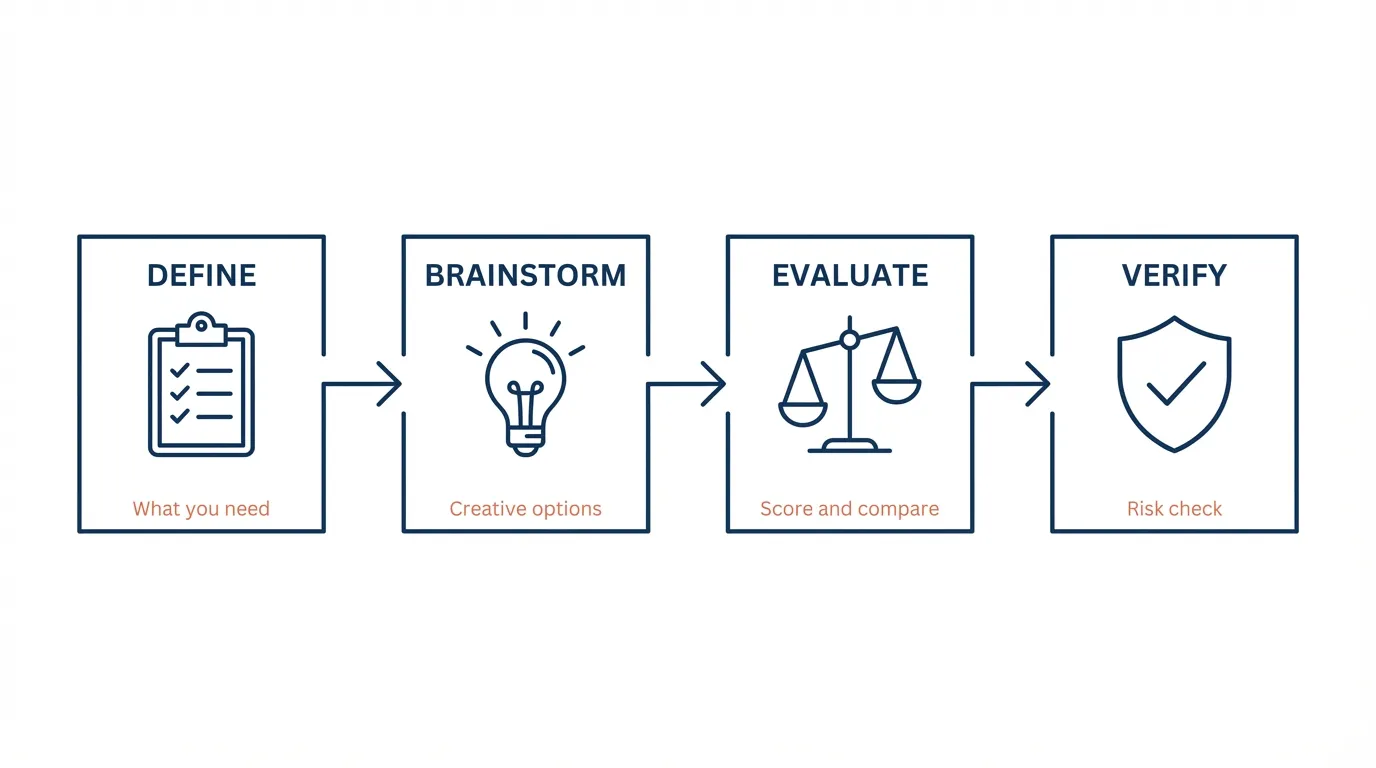
Instead of feeding keywords into a generator and hoping for magic, try a structured process:
1. Define what you're actually looking for
Before generating any names, clarify:
- What does your business do? (In one sentence)
- Who is it for?
- What feeling should the name evoke?
- Are there names you admire from other industries?
2. Brainstorm without constraints first
Write down 20-30 name ideas without checking availability. Include wild ideas. The goal is creative breadth, not practical filtering.
3. Then evaluate systematically
For each promising name, check:
- Verbal clarity: Can people spell it after hearing it once? (The "radio test")
- Brand fit: Does it feel right for your positioning?
- Domain availability: Across TLDs that matter for your industry
- Risk factors: Similar businesses, trademark conflicts, negative associations
4. Get feedback before committing
Show your shortlist to people who don't know your business. Do they get the vibe? Can they remember the name an hour later?
This process takes longer than typing into a generator. But you're making a decision you'll live with for years - possibly decades. The extra time is worth it. For a deeper dive into this full workflow, see our complete guide to choosing a domain name.
What We Built to Solve This
I got tired of the keyword-masher experience while trying to name my own projects. The gap between what generators promise and what they deliver was frustrating enough that I built something different.
URLGenie uses actual AI to brainstorm names - the kind that understands context and makes creative leaps, not just the kind that's good marketing copy. It scores every suggestion for brandability, verbal clarity, and fit. It flags potential risks before you commit.
It's not magic. Naming is hard, and no tool makes it trivially easy. But it's the difference between a keyword masher and an actual naming process.
The Bottom Line
Your domain generator gave you terrible suggestions because it was designed to sell domains, not find good names.
Keyword mashing was never good naming practice. The "AI" label on most tools is marketing, not capability. And the conflict of interest between "help you find the right name" and "sell you something from our inventory" means free generators optimize for the wrong outcomes.
Good naming requires understanding context, judging quality, and assessing risk - things that mechanical keyword combination simply cannot do.
You deserve better than "YourKeywordHub.com." And better tools exist now. Use them.